
Foundations of Pain Mastery & Lifestyle Medicine
A 2-Part Healing Experience with Dr. Sharna Prasad
Communities Heal Communities
Living with persistent pain can be incredibly isolating and challenging. The journey often feels lonely, but when shared with others who truly understand, it becomes lighter and more hopeful.
There’s something magical about the bond formed with peers walking the same path—a sense of connection, understanding, and unwavering support. Lifelong friendships can blossom in these spaces of healing.
The Pain Mastery & Lifestyle Medicine Coaching Groups are designed for Providers and individuals who are ready to take meaningful steps toward improving their quality of life—whether their pain is physical, emotional, psychological, or social.

How It Works
If you are a provider and are interested in running a shared medical appointment group please contact us or schedule a free 15-minute discovery session. These can be any pain or systemic disease diagnosis that you believe would help your patients using the Pain Mastery & Lifestyle Medicine Coaching Groups. This program combines the power of science with compassion and practical tools to help your patients regain control, embrace their healing journey, and rediscover the joy of living. We use the Easy2Care curriculum as an adjunct to the shared medical appointments (click here to take a peek at the modules). Together, we explore evidence-based practices from:
- Lifestyle Medicine
- Acceptance and Commitment Therapy (ACT)
- Movement Science
- Pain Science
- Self-Compassion Science
The weekly shared medical appointments are so helpful to my patients and to me. After several days of a busy clinic and a never-ending inbox of tasks, I find such relief and purpose in the shared medical appointments. It is a joy to be a part of.
Dr. Jonathan Jones, M.D.
Samaritan Rheumatology
Upcoming Coaching Group for Providers
PAIN MASTERY: Integrating ACT and Lifestyle Medicine in Clinical Practice
Join us for a deep dive into pain management strategies that blend mindfulness with medical knowledge – it’s time to master the art!
This course was developed for healthcare providers seeking more effective, compassionate approaches to caring for patients with complex chronic pain. Traditional strategies such as opioids, procedures, and surgery often fall short of restoring quality of life. Likewise, movement interventions without a grounding in pain science—and pain science without a trauma-informed lens—limit meaningful progress.
Our goal is to equip clinicians with evidence-based, non-surgical and non-pharmacological strategies that renew their confidence and enthusiasm for working with people in pain. The curriculum centers on three foundational pillars: Pain Science, Acceptance and Commitment Therapy (ACT), and Lifestyle Medicine.
We are pleased to share both our experience and the current evidence to support providers in cultivating professional curiosity, clinical skill, empathy, and sustainable, whole-person care for chronic pain populations.
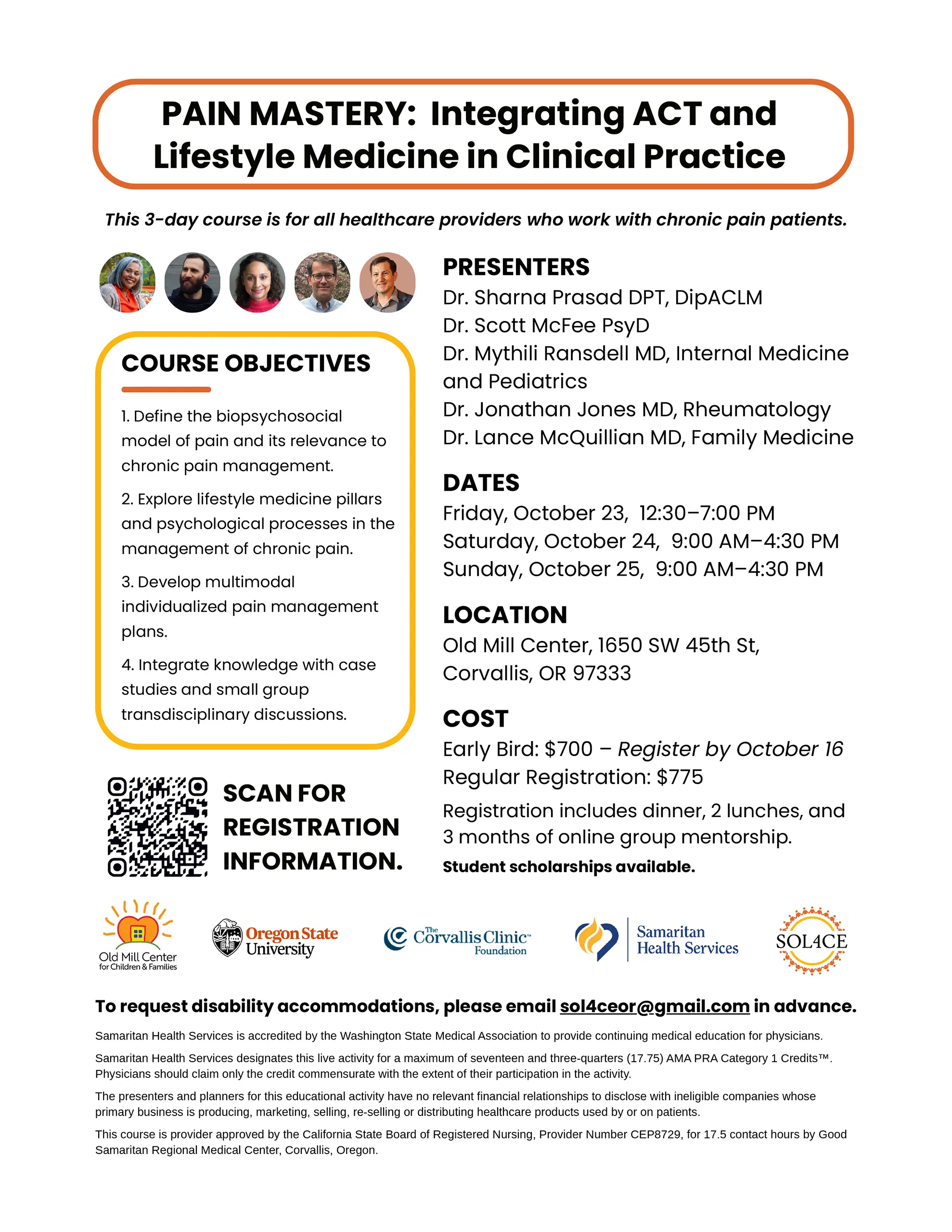
Course Objectives:
- Define the biopsychosocial model of pain and its relevance to chronic pain management
- Explore lifestyle medicine pillars and psychological processes in the management of chronic pain
- Develop multimodal individualized pain management plans
- Integrate knowledge with case studies and small group transdisciplinary discussions
Dates: October 23-25, 2026
Meeting Time: October 23 from 12:30 PM – 7:00 PM • October 24-25 from 9:00 AM – 4:30 PM
Location: Old Mill Center, 1650 SW 45th St, Corvallis, OR 97333
Cost: Early Bird: $700 (register by October 16) • Regular Registration: $775
Registration includes dinner, 2 lunches and 3 months of online group mentorship (1x per month)
Student scholarships available. To request disability accommodations, please email us in advance.
Presenters:

Dr. Sharna Prasad, DPT, DipACLM

Dr. Scott McFee, PsyD

Dr. Mythili Ransdell, MD, Internal Medicine and Pediatrics
Dr. Jonathan Jones, MD, Rheumatology
Dr. Lance McQuillian, MD, Family Medicine
Register Today!
Join us for a deep dive into pain management strategies that blend mindfulness with medical knowledge – it’s time to master the art!
This is a 3 day course taught over Friday-Sunday, October 23-25.. If any of these days don’t work out please do not sign up as CME’s will only be given if you attend all days.
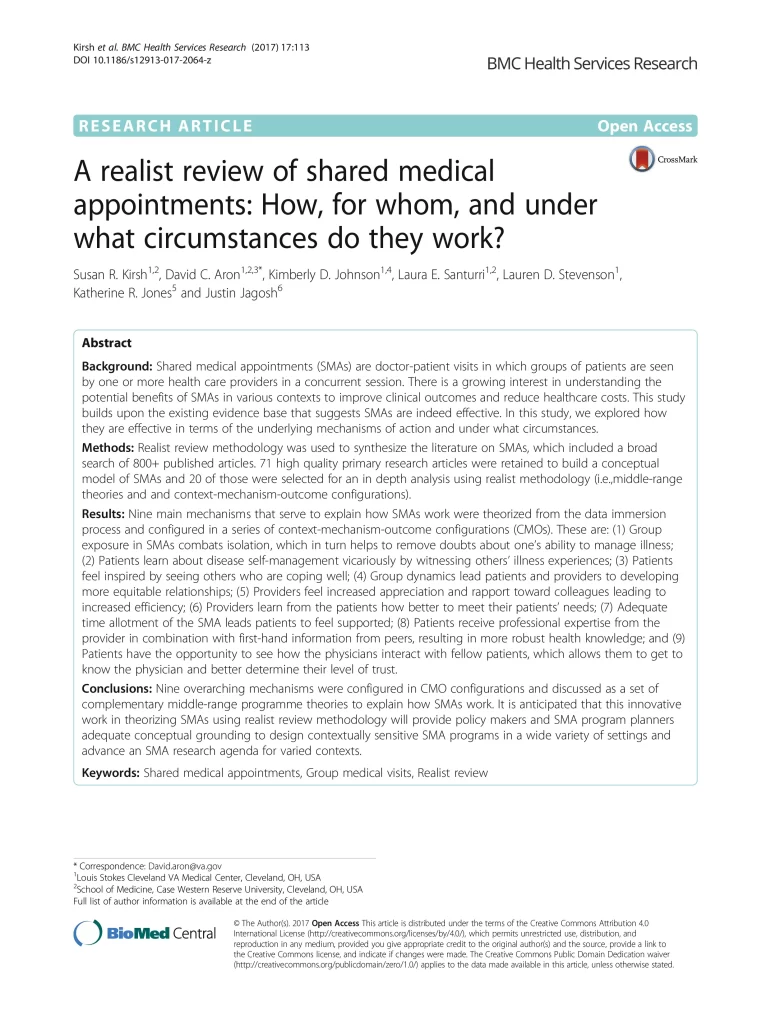
A realist review of shared medical appointments: How, for whom, and under what circumstances do they work?
Shared medical appointments (SMAs) are doctor-patient visits in which groups of patients are seen by one or more health care providers in a concurrent session. There is a growing interest in understanding the potential benefits of SMAs in various contexts to improve clinical outcomes and reduce healthcare costs. This study builds upon the existing evidence base that suggests SMAs are indeed effective. In this study, we explored how they are effective in terms of the underlying mechanisms of action and under what circumstances.
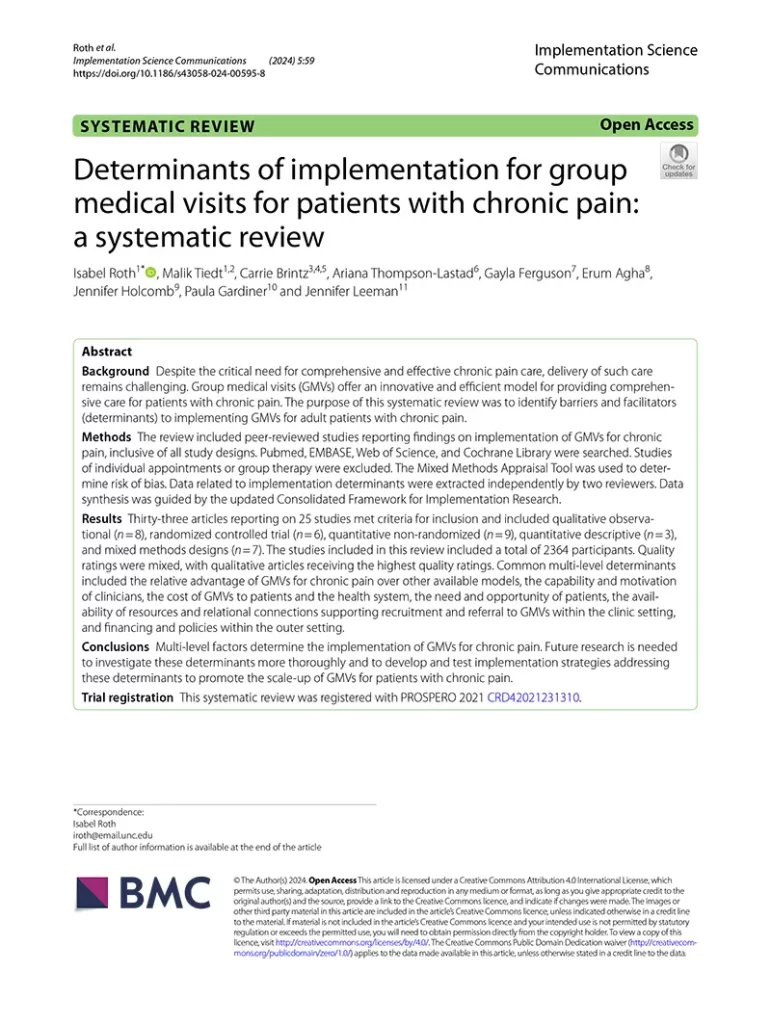
Determinants of implementation for group medical visits for patients with chronic pain: a systematic review
Despite the critical need for comprehensive and effective chronic pain care, delivery of such care remains challenging. Group medical visits (GMVs) offer an innovative and efficient model for providing comprehensive care for patients with chronic pain. The purpose of this systematic review was to identify barriers and facilitators (determinants) to implementing GMVs for adult patients with chronic pain.
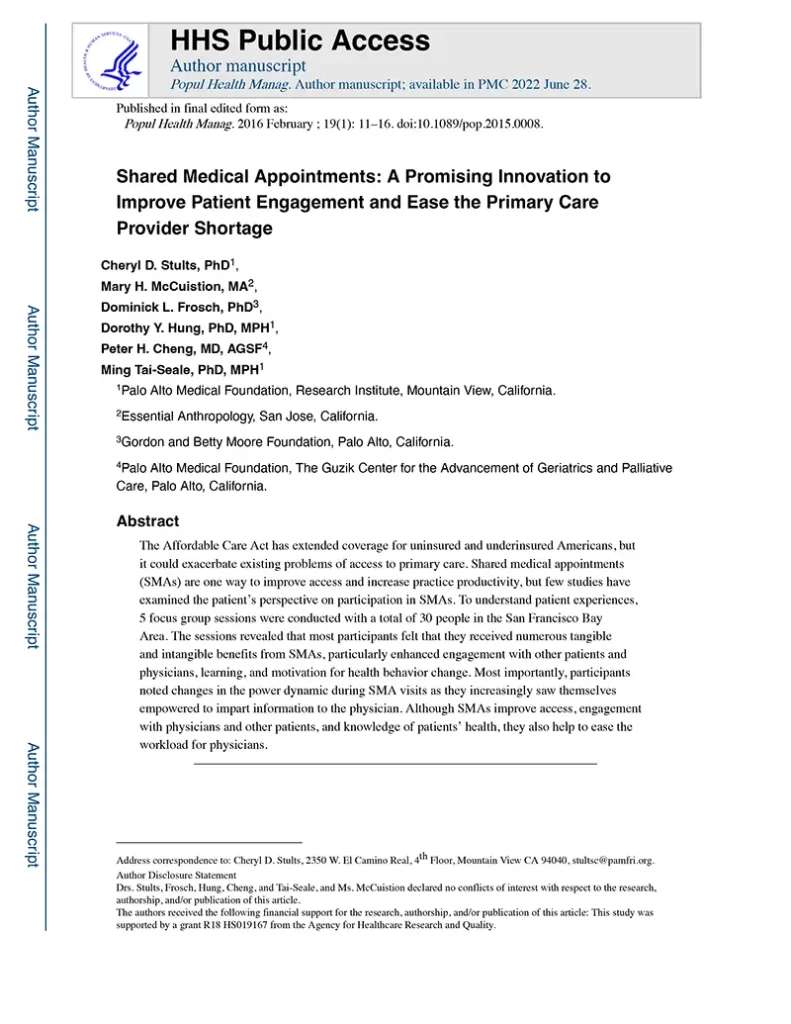
Shared Medical Appointments: A Promising Innovation to Improve Patient Engagement and Ease the Primary Care Provider Shortage
The Affordable Care Act has extended coverage for uninsured and underinsured Americans, but it could exacerbate existing problems of access to primary care. Shared medical appointments (SMAs) are one way to improve access and increase practice productivity, but few studies have examined the patient’s perspective on participation in SMAs. To understand patient experiences, 5 focus group sessions were conducted with a total of 30 people in the San Francisco Bay Area. The sessions revealed that most participants felt that they received numerous tangible and intangible benefits from SMAs, particularly enhanced engagement with other patients and physicians, learning, and motivation for health behavior change. Most importantly, participants noted changes in the power dynamic during SMA visits as they increasingly saw themselves empowered to impart information to the physician. Although SMAs improve access, engagement with physicians and other patients, and knowledge of patients’ health, they also help to ease the workload for physicians.